









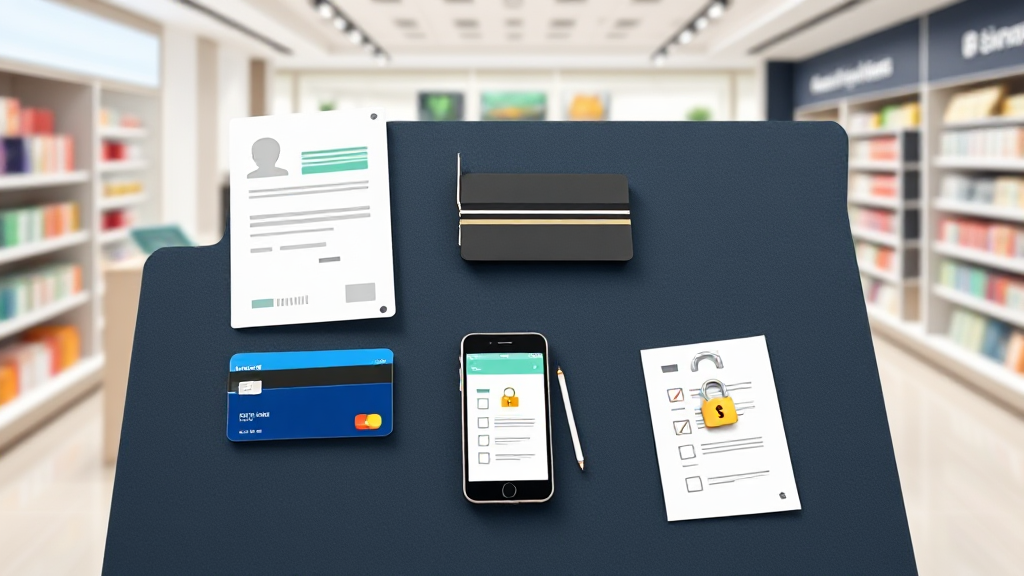
What Changes When You Buy Verified Skrill Accounts as a Power User
You already know how Skrill works. You have sent money, received it, maybe even linked a card or two. What you are actually wrestling with is a different problem: your current account keeps hitting ceilings that a beginner would never notice. Limits that reset too slowly, verification flags that trigger on routine transfers, and counterparties who hesitate when your account history looks thin. That is the real reason experienced users start looking at Buy Verified Skrill Accounts rather than opening yet another fresh profile and hoping it behaves differently.
The gap between a beginner and an experienced user is not knowledge of the interface. It is the cost of friction. A newcomer tolerates a three-day hold. A power user calculates what that hold does to a settlement cycle, a supplier payment, or a freelance payout schedule. This piece treats the subject the way an analyst would: first the requirements you must satisfy before anything else matters, then the procedure in the order it actually happens, and finally the checks that separate a workable account from a liability.
Requirements That Decide Everything Before You Start
Beginners evaluate a Skrill account by whether it opens. Experienced users evaluate it by whether it survives scrutiny. Those are different tests, and the second one has prerequisites that people routinely skip.
The first requirement is identity consistency. Every document attached to the account must describe the same person, and that person must be the one operating it. Name spelling, date of birth, and address formatting need to match across the ID, the proof of address, and whatever profile details are already on file. A single mismatch between a middle initial and a full middle name is enough to stall a review at the worst possible moment. If you are buying an account that is already verified, the value comes precisely from the fact that this consistency was established before you took possession, not after.
The second requirement is jurisdictional fit. Skrill’s available features, currencies, and funding routes differ by country, and they differ again by the residency declared on the account. An account verified in one region may not support the local bank rails you depend on in another. Before committing, map your actual money flow: where funds originate, where they land, which currency they pass through, and whether any intermediary institution imposes its own restrictions. Experienced users do this on paper. Beginners discover it through a failed transfer.
The third requirement is purpose clarity. Accounts that show a coherent pattern of activity attract less attention than accounts that look erratic. If your usage is business payouts, keep it looking like business payouts. If it is freelance income, keep it looking like freelance income. Mixed, unexplained, high-velocity movement is the pattern that invites questions. This is not about hiding anything; it is about being legible.
The fourth requirement is a realistic budget. The price of an account is only the entry cost. You also need to account for the balance you intend to keep, the fees attached to your funding method, currency conversion spreads, and the possibility that you will need to move money out faster than the standard schedule allows. A cheap account that forces expensive withdrawals is not cheap.
Finally, there is the documentation requirement for the purchase itself. A reputable seller should be able to explain what is being transferred, what remains in their control, and what you receive in writing. If that explanation is vague, the requirement is not met, regardless of price.
The Procedure, in the Order It Actually Matters
Most write-ups describe buying an account as a single transaction. In practice it is a sequence, and the order affects the outcome.
Step one: define the specification before you shop. Decide the country of verification, the currency you will hold, the funding methods you need, and the transaction volume you expect in a normal month. Write these down. When you compare sellers, you are comparing how well each one matches this specification, not how attractive the headline price looks. This single habit eliminates most bad purchases.
Step two: verify the seller’s track record. Look for evidence of completed transactions, not just testimonials. Ask how long the seller has operated, how they handle a dispute, and whether they will put their commitments in writing. An analyst’s instinct here is to weight the refund and replacement policy more heavily than the marketing copy, because that policy is what you actually rely on if something goes wrong.
Step three: confirm exactly what “verified” means in this context. Verification can mean identity confirmation, address confirmation, payment-method confirmation, or all three. It can also mean the account has simply passed an initial review. Ask which checks were completed, when, and what evidence exists. The difference between a partially verified account and a fully verified one shows up the first time you attempt a large transfer.
Step four: complete the handover properly. This includes transferring control of the associated email address, updating recovery options, changing the password to something you alone control, and enabling two-factor authentication immediately. Do not postpone these steps. An account that is still reachable by the previous owner is not yours in any meaningful sense.
Step five: run a low-value test before you commit real money. Send a small amount in, move a small amount out, and confirm that both directions behave as expected. This costs a little in fees and saves a great deal in surprises. Experienced users treat this as mandatory; beginners often skip it and learn why they should not have.
Step six: document the account’s new baseline. Record the date of transfer, the verification status, the limits currently applied, and the funding methods attached. When something changes later, this record tells you whether the change came from your own activity or from the account’s prior history.
If you are sourcing from a marketplace that specializes in this category, the procedure above maps cleanly onto Buy Verified Skrill Accounts listings, where the specification, verification scope, and handover terms should all be stated before purchase. The point is not the listing itself; it is that a listing which answers these questions is doing the analytical work for you.
How the Experience Diverges for Beginners and Power Users
This is where the two audiences genuinely part ways, and understanding the divergence explains why the same product serves them differently.
A beginner’s primary risk is operational: they may not know how to change recovery settings, may not recognize a phishing attempt aimed at the account, and may not understand why a transfer is pending. Their priority is a smooth first month. For them, a verified account mainly removes the initial waiting period and the anxiety of an unverified profile.
An experienced user’s primary risk is structural. They already know the interface. What threatens them is a limit that is lower than their transaction size, a verification status that does not cover the payment method they rely on, or a compliance review triggered by activity patterns the account inherited rather than created. Their priority is headroom: the ability to move meaningful amounts without the account buckling.
That difference changes what you should inspect. A beginner should confirm the account opens, the email is transferable, and the basic verification badge is present. A power user should confirm the specific limits attached to the account, the currencies enabled, the funding methods already validated, and whether the account’s history contains anything that could surface during a future review. A clean history is worth more than a discount.
It also changes the calculus on price. A beginner may reasonably choose the cheapest verified account that functions. A power user should be willing to pay more for an account whose limits match their actual volume, because the alternative is splitting activity across multiple accounts, which creates its own pattern of scrutiny and its own administrative overhead. One account that fits is almost always better than three that half-fit.
There is a third divergence worth naming: the exit. Beginners rarely think about closing or migrating away from an account. Experienced users plan for it, because business relationships end, currencies change, and platforms revise their terms. Before you buy, ask how straightforward it would be to withdraw your balance and wind the account down if you needed to. An account that is easy to fund but painful to empty is a trap, and it is a trap that only becomes visible when you think like someone who plans to leave.
What to Check After the Handover, and Why Each Check Exists
The purchase is not the finish line. The first two weeks after handover determine whether the account is genuinely usable.
Check the security posture first. Password changed, two-factor enabled, recovery email and phone updated, and any linked devices or sessions revoked. Do this before you deposit anything. If the seller retains any recovery path, you do not control the account.
Check the limits in the interface, not in the listing. Listings describe what the seller believes; the account settings describe what the platform enforces. Compare the two. If the enforced limits are lower than what you were told, resolve it immediately rather than after a failed transaction.
Check the verification scope. Confirm which documents are on file and which payment methods are validated. If you plan to fund from a bank account that has never been associated with this profile, expect an additional verification step and plan your timeline around it.
Check the transaction history for anomalies. Look for chargebacks, reversed transfers, or unusual counterparties. These are the details that resurface during a compliance review months later, and knowing about them in advance lets you decide whether to keep the account or walk away.
Check the fee structure against your own usage. Fees that look trivial on a single transfer can dominate your costs at volume. Model a typical month using the actual published rates, including any currency conversion spread, and compare that total against the alternatives you were considering. This is the analysis that separates a good deal from a merely cheap one.
Check the seller’s responsiveness after payment. A seller who answers quickly before the sale and slowly afterward has told you something important. Test this with a minor question in the first week. The response time is a preview of how a real problem would be handled.
Check your own records. Keep the purchase confirmation, the verification details, and the handover correspondence together. If a dispute arises, this file is your evidence, and reconstructing it later is far harder than assembling it now.
Judgment Calls That Decide Whether This Was a Good Decision
An analyst comparing alternatives does not stop at whether the account works today. The question is whether it will still be the right choice in six months.
Consider concentration risk. If a meaningful share of your financial activity runs through a single account you purchased rather than built, you have a single point of failure. That is acceptable if you understand it and have a fallback, and dangerous if you do not. Experienced users keep a secondary route available, even if they rarely use it.
Consider the direction of platform policy. Verification requirements tend to tighten over time, not loosen. An account that is fully verified today under current standards may face additional checks as rules evolve. The advantage of buying a verified account is that you start from a stronger position than an unverified one, but it is not a permanent exemption. Plan for periodic re-verification and keep your documents current.
Consider the total cost of ownership honestly. Purchase price, funding fees, withdrawal fees, conversion spreads, and the value of your own time spent managing the account all belong in the same column. When you add them up, some accounts that looked expensive at the outset turn out to be efficient, and some that looked like bargains turn out to be costly. The comparison only becomes meaningful once every line is included.
Consider what you are actually buying. You are not buying a shortcut around verification; you are buying an account whose verification is already complete, along with the time savings and reduced uncertainty that come with it. That is a legitimate thing to value, particularly when a delayed verification would cost you a contract, a payout window, or a supplier relationship. Framed that way, the decision is a straightforward cost-benefit calculation rather than a workaround.
And consider the alternative one more time. Opening a fresh account yourself costs nothing in cash but costs days or weeks in waiting, plus the risk that something in your documentation triggers a longer review. For a beginner with flexible timelines, that trade is often worth taking. For someone whose money needs to move on a schedule, it usually is not. Knowing which of those two people you are is the single most useful thing you can determine before you spend anything.
The experienced user’s advantage is not that they know a secret. It is that they ask better questions before the transaction and check more carefully after it. Apply the requirements, follow the procedure in order, and run the post-handover checks without skipping any. If the account holds up under that scrutiny, the decision was sound. If it does not, you found out early, when walking away was still cheap.